San Juan pushes into a third month of failing water service
A cracked Superaqueduct left over 120,000 customers with spotty service, the National Guard hauling water and a severe drought tightening the squeeze
Por Redacción InDiario|Noticias|
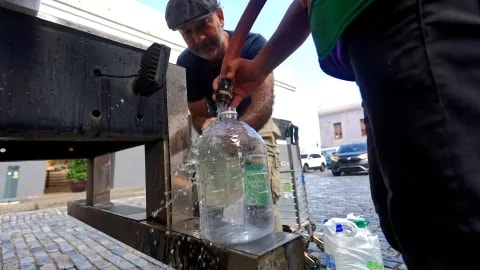
Tens of thousands of residents in San Juan and its surrounding municipalities have now gone into a third month without reliable running water, in a crisis that has forced Puerto Rico to activate the National Guard, disrupted businesses across the capital and is colliding head-on with a deepening drought across the southern half of the island.
The emergency traces to mid-June, when authorities reported a serious leak in a pipe of the Superaqueduct, one of the island's most important water transmission systems, serving the San Juan metropolitan region. While repair crews worked, two additional failures were identified, knocking out or degrading service for more than 100,000 people across San Juan, Bayamón, Guaynabo, Caguas, Juncos and Loíza. At the peak of the outages, more than 120,000 customers of the Puerto Rico Aqueduct and Sewer Authority (PRASA) faced low pressure, inconsistent flow or no service at all, and the utility's executive president, Luis R. González Delgado, warned that sudden pressure changes could trigger new breaks even after crews finished what he described as a complex repair. Some residents' outages predate the June crack entirely, with one San Juan man telling NPR in mid-June that he had already spent nearly two months without water. Governor Jenniffer González Colón activated the National Guard to run tanker trucks through affected communities. "We are mobilizing every available resource from the government and the private sector," the governor said as the crisis stretched on. Restaurants, hotels, museums and stores have reported recurring difficulties operating, schools adjusted schedules, and residents in parts of the capital described hauling five-gallon jugs up apartment stairwells in the summer heat.
A CRISIS YEARS IN THE MAKING
The burst pipe exposed failures that long predate it. Thousands of residents in San Juan's eastern corridor had already endured nearly a year of intermittent service after two pumps at the Finca Rosso I station were damaged by electrical fluctuations in August 2025, and although PRASA declared the project an emergency, funding was not approved until November 2025, pushing repairs into mid-2026. Roughly 59 percent of all treated water in Puerto Rico is lost before it ever reaches a customer, leaked through crumbling pipes or unaccounted for through faulty meters, and the American Society of Civil Engineers graded the island's drinking water infrastructure a D in its most recent report card. The political fallout has crossed party lines. The mayor of San Juan sued the water authority, the capital's emergency management office logged more than 3,000 water-related emergency cases in the first two weeks of June alone, and Puerto Rican Independence Party leader Juan Dalmau blamed decades of what he called administrative incompetence by both of the island's governing parties, noting that more than half of the drinking water supply has been lost over the past 19 years. The island's Senate has opened its own special inquiry into the utility's management of the crisis.
THE DROUGHT TIGHTENS THE SCREWS
What began as an infrastructure failure is now compounding into a supply problem. As of late July, the U.S. Drought Monitor classifies Puerto Rico's southern plains from Cabo Rojo to Cidra in Severe Drought, with Moderate Drought spanning the eastern and southern half of the island and most regions receiving less than 60 percent of normal rainfall over the past 60 days. Rivers and reservoirs are declining, groundwater wells in the south and southeast have reached critical levels, farmers in Canóvanas report record dryness with cracked soils, and fire danger is elevated, according to the federal update, which places the neighboring U.S. Virgin Islands in Extreme Drought. For a system that loses more than half its water before delivery, shrinking reservoirs leave far less margin for the next break. The stakes reach beyond the island. Puerto Rico's water utility depends heavily on federal funding for capital improvements, and each month of visible failure lands in Washington at a moment when the island's management of federal dollars is already under scrutiny in Congress. Officials have said full stabilization of the system will take time, with drought and extreme heat intensifying the strain, and for tens of thousands of American citizens in and around the capital, the taps remain an open question well into the summer.