Gill says no English means no business becoming a citizen
The Texas Republican filed the English Language Proficiency Act to strip the age-based exemptions that let some applicants skip the English test
Por Redacción InDiario|Política|
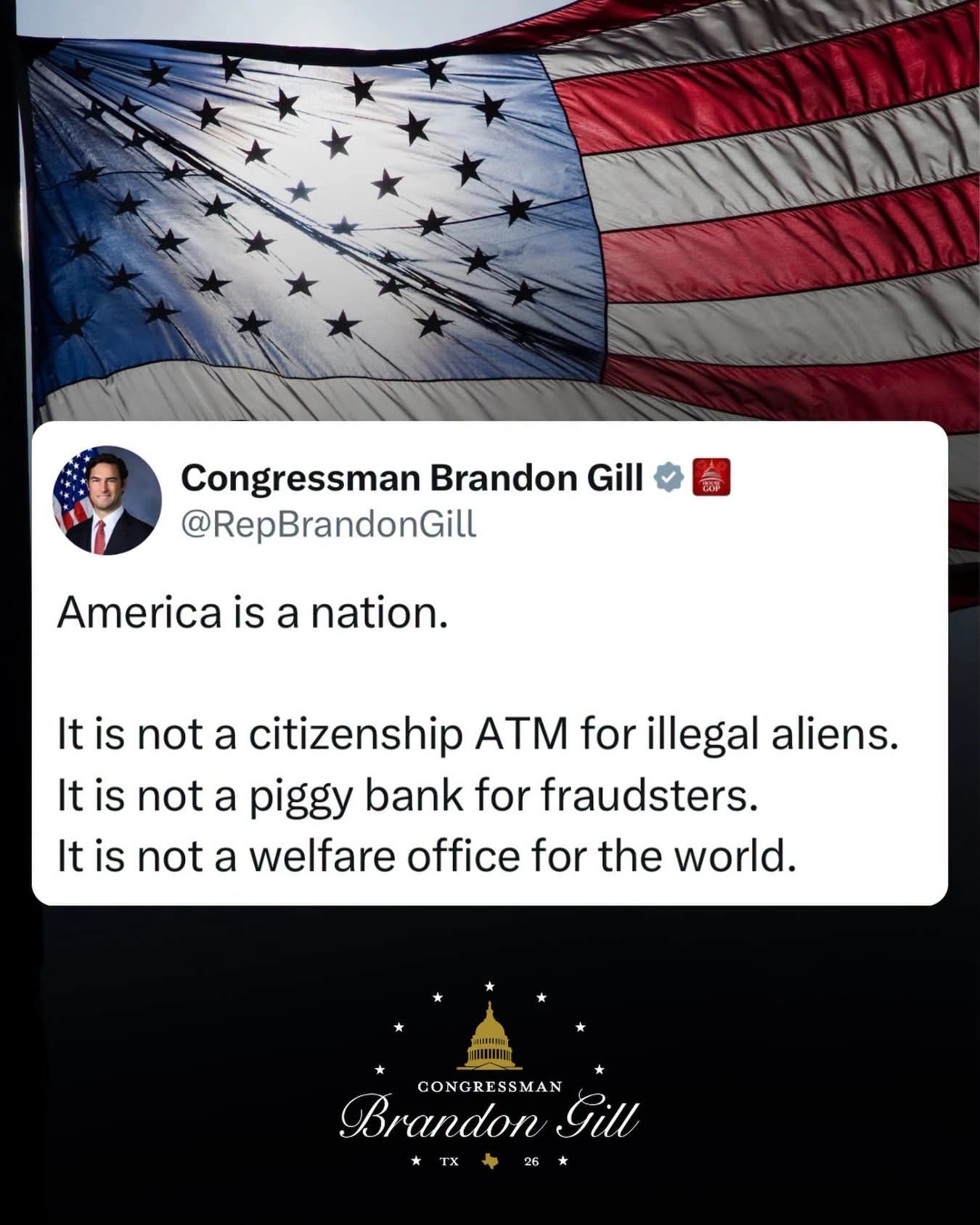
Congressman Brandon Gill declared that immigrants who do not speak English have no business becoming American citizens, as he introduced legislation to eliminate the exemptions that currently allow certain naturalization applicants to skip the English proficiency exam.
"If you don't speak English, you have no business becoming an American citizen," the Texas Republican wrote on X on July 16, announcing that his bill would close what he described as a loophole letting some immigrants avoid the test everyone else must pass. The measure, titled the English Language Proficiency Act, would rescind the exceptions to the English and civics examinations written into federal naturalization law.
Under current rules, lawful permanent residents can be excused from the English requirement based on their age and years of residency, exemptions that Gill's bill would remove so that every applicant faces the same standard regardless of age. The congressman emphasized that the legislation imposes no new requirements. "English is the common tongue that holds American communities together," Gill said in a statement, arguing that it is of paramount importance for every citizen to communicate in the same language and that the bill restores equal treatment under naturalization law.
REPUBLICAN COSPONSORS AND ADVOCACY BACKING
The bill arrived with the support of Republican Representatives Randy Fine of Florida, Barry Moore of Alabama and Beth Van Duyne of Texas, along with the Immigration Accountability Project and ProEnglish. Gill has made English proficiency a signature issue in recent months, pointing to census data showing that the share of United States residents over age five who speak a language other than English at home has doubled over the past four decades, and to estimates placing the population with limited English proficiency between 25 and 27 million people, roughly 8 percent of the country. The push aligns with the broader direction of the Trump administration, which designated English as the official language of the United States by executive order.
The measure applies exclusively to the naturalization process for foreign nationals seeking citizenship. It has no effect on Puerto Ricans, who are American citizens by birth under federal law regardless of the language they speak, nor does it prohibit any citizen from speaking other languages.
